
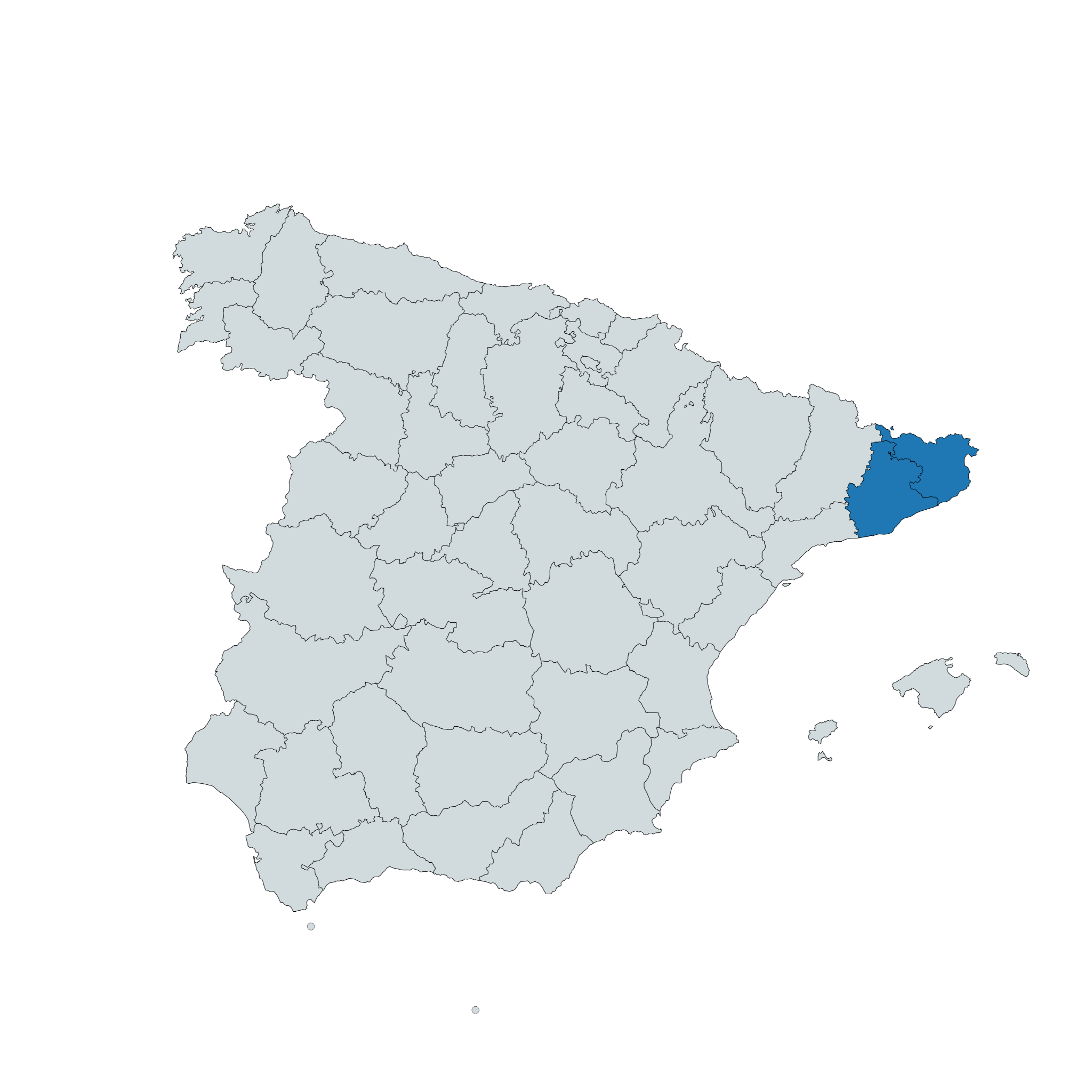
Catalonia Region:
1. Municipality of Gombrèn: 200 inhabitants (85 permanent)
2. Municipality of Sant Quirze de Besora: 2.100 inhabitants

The Barcelona Provincial Council provides comprehensive support for the energy transition, from the most strategic planning phase, to the drafting of studies and executive projects and financing for their implementation, in addition to training and communication support. The Barcelona Provincial Council is the coordinator of the Covenant of Mayors in the province of Barcelona, with which it provides direct support in the drafting of Action Plans for Sustainable Energy and Climate and in carrying out communication and dissemination actions, in addition to training local entities.

The Girona Provincial Council is the territorial coordinator of the Pact of Mayors for Energy and Climate in the province of Girona, an initiative to which more than two hundred municipalities in the Girona province have adhered. The municipalities have local action plans for sustainable energy and climate (SECAP), and the Environment Service of the Girona Provincial Council has as one of its purposes and powers to advise the municipalities and offer them general and specialized, technical and service provision assistance, as well as economic support in relation to their planning, monitoring and execution.

County Councils of Ripollès and Osona regions, with the main function of coordinating and managing their services and improve the well-being of citizens. From the environmental areas, both seek to promote the move towards an energy system based on sustainable energies and in which all citizens can participate.


Osona Local Energy Agency is a department of the Osona County Council whose main objective is to provide advice and collaboration on energy accounting for the county’s town councils. It works with the objectives of energy efficiency and savings, and the promotion of renewable energies.

Mayor and the Department of Environment of the municipality of Sant Quirze de Besora.

Mayor and the Department of Environment and Energy Transition of the municipality of Gombrèn.

Association of Rural and Maritime Initiatives of Catalonia, working in the community energy transformation office in rural areas (OTC). The OTC has as its main lines of work the dissemination and knowledge of the energy transition, and as a central objective of how energy communities can involve the population to be part of this change. In addition, actions are also carried out aimed at advising and accompanying energy community projects with a series of supports focused on the technical/legal/economic areas… among others.

Local Action Group. It is a non-profit entity that seeks to promote rural development in collaboration with different local entities. Its main task is the application of LEADER aid in the rural world in order to improve its potential, it also participates in different projects that allow improvements to be introduced within the territory (highlighting the ENFOCC2030 project, the Life eCOadapt50 project or the Office of Community Transformation, among many others).

Ripollès Development Agency – Promotion of actions to promote greater territorial cohesion, as well as increase the competitiveness and overall development of the Ripollès region.

The Vall del Ges Consortium, Orís and Bisaura work to improve the economic development of the territory, preserve it environmentally and promote social cohesion and the quality of life of citizens.

OECoop is a non-profit second-degree cooperative. The purpose of the cooperative is the intercooperation of its members to help them generate tools and services that allow them to improve the energy transition process. We want to promote citizen empowerment to participate in social, economic and ecological transformation.

More than thirty entities are part of the Ateneu Terres Gironines. It is made up of cooperatives, associations, foundations, insertion companies, limited companies and also town councils. Their line of work is support towards cooperativism.
MRP Meetings
1st MRP Meeting
17 participants – ENTRACK Project introduction, MRP establishment and discussion on SECAPs
2nd MRP Meeting
13 participants – Diagnosis and dialog: exploring energy perception in the territory, and discussion about SECAPs’ design
3rd MRP Meeting
15 participants – Diagnosis and dialogue: laying the foundations for co-design by identifying barriers and opportunities and analysing the pilot municipalities’ SECAPs
4th MRP Meeting
14 participants – Agreements on actions with the citizens of Gombrèn (June 18, 2025)
14 participants – Agreements on actions with the citizens of Sant Quirze de Besora (October 24, 2025)
5th MRP Meeting
16 participants – Co-design of roadmaps for the 4 SECAP action selected (2 for each municipalitiy)
6th MRP Meeting
18 participants – Co-design and plan for the 4 SECAP action selected (2 for each municipalitiy) and introducing the Climate Rural Contract
7th MRP Meeting
14 participants – Results obtained in co-design – Shared electric vehicle presentation (May 30, 2026, in Sant Quirze de Besora)
10 participants – Results obtained in co-design – Presentation of shared solar consumption in Gombrèn (June 10, 2026, in Gombrèn)
8th MRP Meeting
10 participants – Modelling tool results discussion and assessment of the MRP and the co-design process
MRP Meetings
1st MRP Meeting: the session began with an explanation of the project’s and the MRP’s objectives, as well as an overview of how the group’s activities would be organised. Following this initial presentation, the MRP members participated in a series of discussion activities to share their vision, identify initial knowledge of SECAPs and their development, and discuss local energy plans. The meeting concluded with the scheduling of the next one, after which those present were asked to complete a questionnaire evaluating the session and providing feedback on the MRP’s objectives.
4th MRP Meeting – 1st co-design session: the fourth MRP session was the first co-design session for the SECAP activities chosen in each pilot municipality. The co-design process began with a citizen engagement session split into two meetings, one in each municipality. Insightful discussions about challenges and opportunities took place in both cases. The sessions were scheduled for the afternoon to encourage citizen participation. Community feedback and demands were collected using participatory materials such as opinion posters and idea maps. The proposed actions were the installation of a biomass-fuelled district heating system and a building renovation programme in Gombrèn and the introduction of an electric vehicle sharing system and a building renovation programme in Sant Quirze de Besora. The mayors were responsible for explaining the activities to the citizens and were present during the discussions. After the meeting, the council sent the local community mobile-friendly visual material explaining the purpose and outcomes of the meeting and inviting those unable to attend to complete a survey and share their views.
7th MRP Meeting – 4th co-design session: at the end of the co-design process a meeting was held in each municipality to inform about how the co-design process had shaped the actions discussed in the first meeting with citizens, and to prioritise next actions. Regarding Sant Quirze de Besora, the new electric shared van chosen by the citizens was presented and future uses where discussed. The presentation also included a commitment to provide ongoing information on funding opportunities for building renovation, including technical and financial support. Regarding Gombrèn, the meeting confirmed the value of participatory process in defining realistic priorities for the municipality. It reinforced the importance of citizen engagement for collective energy transition initiatives, consolidated building renovation and photovoltaic self-consumption and the municipality’s immediate priorities, and left the possibility of revisiting the biomass district heating project under more favourable conditions in the future.
2nd MRP Meeting: the second meeting aimed to provide a practical space in which policies could be developed. From this perspective, the technicians provided an overview of all the contextual analysis carried out to date, presenting the results of the stakeholder matrix, MRP member interviews and Climate Explorer interviews. However, in response to the municipalities’ demand for a more practical approach, the session’s main objective was to collaborate on developing SECAP actions through co-design activities. The second part comprised a participatory activity to design roadmaps for two SECAP actions, one for each pilot municipality. The activity’s added value lay in sharing knowledge, resources and initiatives, and demonstrating the importance of the MRP working group.
5th MRP Meeting – 2nd co-design session: local authorities, policymakers, Local Action Groups (LAGs), third-sector organisations and technical experts gathered to co-design the four selected SECAP actions: energy renovation in both municipalities; an electric vehicle sharing system in Sant Quirze de Besora; and a biomass-based district heating system in Gombrèn. First, key conclusions from the citizen sessions were presented. Participants then worked in municipality-based groups to co-design roadmaps for each action, identifying key components such as funding, governance, citizen participation, and technical implementation. Particular emphasis was placed on addressing energy poverty and ensuring inclusive participation. The session concluded with each group presenting their proposals, which were then discussed collectively, allowing participants to refine them through shared feedback and cross-sectoral exchange.
8th MRP Meeting: the last MRP meeting focused on discussing the results of the ENTRACK energy policy modelling tool and reviewing the implementation of co-designed SECAP actions in pilot municipalities. The meeting also involved evaluating the Municipal-Regional Partnership (MRP) and the co-design process. The modelling tool results prompted a discussion on sectors where climate objectives are most challenging to achieve, particularly transport and building renovation. The mayors then presented the progress of the co- designed actions. Although renovation activities are still limited due to funding constraints, Gombrèn is continuing to evaluate future energy solutions linked to its shared self-consumption initiative, while Sant Quirze de Besora has successfully launched its shared electric vehicle service. Finally, participants gave a very positive assessment of the MRP process, highlighting the value of face-to-face discussions, knowledge exchange, discussion of specific actions and stakeholder diversity. There were discussions about continuing this partnership by building on existing collaborative events. The organisers of these events expressed a willingness to engage a broader range of stakeholders and focus their efforts on specific actions, as has been done in the MRP. Participants were also informed that a replication event will take place after the summer to present the project’s main outputs.
3rd MRP Meeting: this meeting focused on laying the groundwork for future co- design. A dynamic and open discussion was used as a methodology to understand and collect information about the status of the SECAPs in pilot municipalities. Before starting, a welcome speech was given, reminding attendees of the purpose of MRP meetings, with a particular focus on the third MRP and the benefits of co-design. The results of the self-assessment carried out in the pilot municipalities, as well as the establishment of the national Community of Practice, were presented. Then, during the open discussion, barriers and opportunities for co designing SECAP actions were identified. This was followed by an analysis of the municipalities’ SECAPs, indicating the degree to which their actions had been implemented, as well as their characteristics and the stakeholders involved. This analysis formed the basis for selecting two SECAP actions from each municipality to be co-designed in subsequent MRP sessions.
6th MRP Meeting – 3rd co-design session: the technical stakeholders met again to continue co-designing the SECAP actions and reflecting on the best way to organise the final two MRP meetings. First, the ENTRACK training course and the Climate Rural Contract (CRC) were presented. The MRP members were briefed on the purpose and function of the CRC and agreed to sign it. The CRC was defined as a commitment letter constituting a collective declaration of participation, defining a shared vision and ensuring the sustainability of actions initiated in the MRP context once the ENTRACK project ends. To make progress on the co-design of the actions, the mayors then presented the progress they had made since the last meeting and the difficulties they were facing. Subsequently, the whole group participated in discussions to find solutions to these challenges. This approach ensured that the discussions were not confined to the geographical scope of each municipality, as had been the case in the previous session. It also enabled the group to leverage its collective intelligence and draw on knowledge and experiences from other regions. Furthermore, experts in mobility, district heating and renovation were invited to provide additional insights.